
How to Plant a Bare-Root Tree Correctly
Why Small Woodlands Matter More Than You Might Think
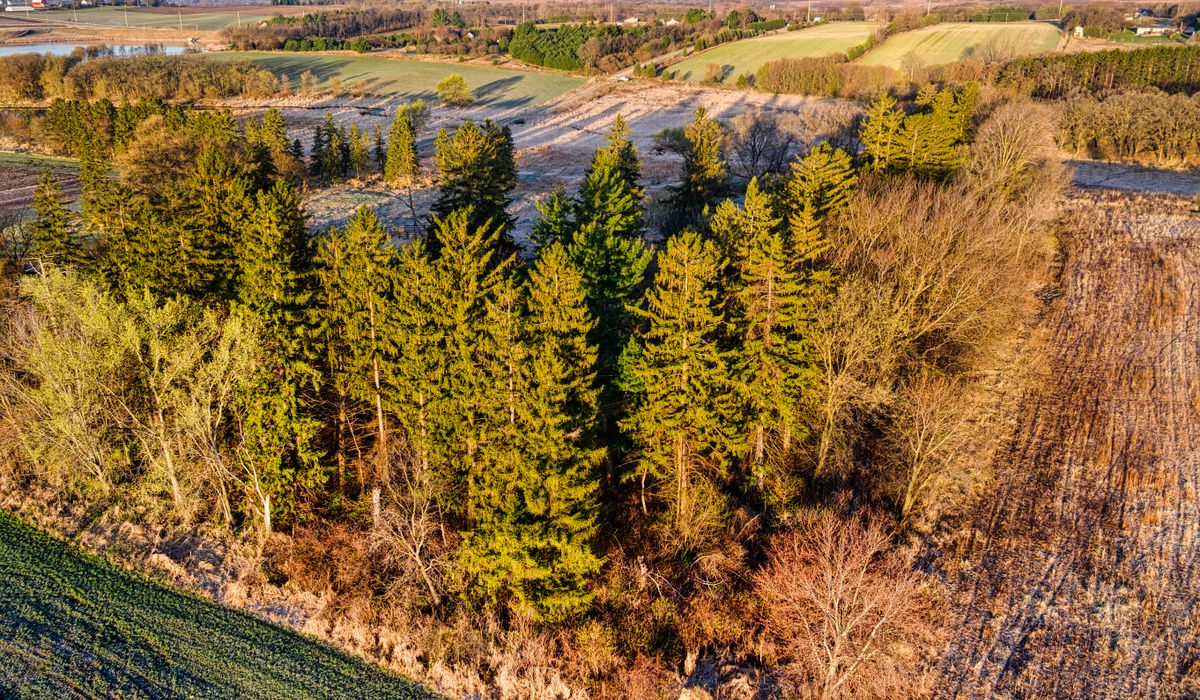
A two-acre copse tucked behind a paddock, a strip of old hazel along a field boundary, or a neglected corner of birch and willow that floods every winter — these modest patches add up. Across Britain, small woodlands form a huge proportion of our tree cover, and they are often the most ecologically valuable because they sit next to hedgerows, gardens and rough grassland, creating the linked-up habitat that wildlife needs to move and feed.
The good news is that managing one doesn't require a forestry degree or heavy machinery. A thoughtful mix of thinning, coppicing and simply leaving deadwood alone can transform a dark, birdless stand into something humming with life within a few seasons.
Start by Looking, Not Cutting
Before you fell a single stem, spend a winter walking your woodland properly. Note which species you have, how densely they're packed, and where the light falls. A simple sketch map with a few rough compartments is enough. Look for the clues that tell you what's already working: holes in trunks, fungi on stumps, badger paths, the drumming of a woodpecker.
Useful things to record:
- Tree species and roughly what proportion of each — oak, ash, birch, hazel, willow, alder, sycamore.
- Age structure. A healthy wood has young, middle-aged and old trees side by side. Many small woodlands have only one age class, often because they were planted in a single year.
- Light levels at ground level in midsummer. If you can't see dappled light or any flowering plants, the canopy is too closed.
- Any legal constraints. Felling licences are usually needed above five cubic metres per calendar quarter, and there are exemptions for small stems. Tree preservation orders, conservation areas and sites of special scientific interest all need checking first, and nesting birds and bats are legally protected.
Thinning: Letting Light Down to the Floor
Thinning is the single most effective thing you can do for biodiversity in a crowded wood. Dense, even-aged stands cast a blanket of shade that kills off woodland flowers, brambles and the insects that feed on them. By removing a proportion of stems, you let warmth and light reach the ground.
Work on a rough cycle of every five to seven years, taking out around 15 to 20 per cent of the stems. Favour the best-formed trees of the species you want to keep — usually oak, wild cherry, field maple or lime — and take out the suppressed, the forked, the leaning and the overcrowded. Aim to end up with roughly 100 to 200 well-spaced trees per hectare, depending on species.
Don't tidy everything. Leave the cut stems as brash piles, and create the occasional small glade of 10 to 20 metres across. Glades dry out early in spring and warm up fast, which is exactly what solitary bees, butterflies and basking reptiles want. Along rides, mow or brush-cut only every second or third year, and never all at once — a mosaic of short and tall vegetation supports far more species than a uniformly mown path.
Coppicing: Cutting That Rejuvenates
Coppicing — cutting a tree close to the ground so it regrows from the stool — sounds drastic but is one of the oldest and kindest forms of woodland management. It resets the tree's age, floods the wood with light, and produces a dense thicket of young growth that is superb for nesting birds such as nightingales, willow tits and garden warblers.
Traditional rotations are worth respecting:
- Hazel: 7 to 15 years, depending on whether you want pea sticks or bean poles.
- Sweet chestnut: 10 to 20 years for durable poles.
- Willow and alder: 3 to 6 years on damper ground.
- Ash and field maple: 10 to 15 years in mixed stools.
Never coppice the whole wood in one go. Divide it into coupes and cut one each year, so there's always a range of ages — some open, some thickening up, some nearly mature. Leave a few standards, ideally oak, to grow on above the coppice for timber, acorns and hole-nesting birds. And be cautious with ash: dieback is widespread now, so retain any tree showing tolerance rather than clearing healthy stems.
Deadwood: The Habitat We're Too Keen to Tidy
Dead wood is not waste. It is a slow-release larder and nursery for fungi, beetles, bats and hole-nesting birds, and it locks up carbon while it decays. Many of our rarest invertebrates, including the stag beetle, depend on it entirely.
Aim to leave:
- Three to five standing dead trees per hectare where they aren't near a path, boundary or building.
- A few log piles, placed in differing light — some in shade, some in sun, since different species need different conditions.
- Some fallen timber left where it lands, rather than stacked.
- Stumps cut high, at half a metre or more, which rot beautifully and are easy to see.
Safety comes first: check anything near a footpath or road with a competent tree surgeon before you leave it standing.
Working With the Seasons
Timber work belongs in winter, roughly November to February, when sap is down, the ground is firm and nesting birds are absent. Avoid machinery on wet soil — compaction can take decades to undo — and lay brash mats on soft ground if you must drive over it. Spring and summer are for observing: noting what flowers, what sings, and what the previous winter's work has achieved.
Do a little each year rather than a great deal every ten. Small, regular interventions keep the wood in a constant state of gentle change, which is precisely what British wildlife evolved alongside. Look after the light, the age structure and the deadwood, and the biodiversity will follow.
LEAVE A COMMENT