
Spotting Common Tree Diseases in British Gardens
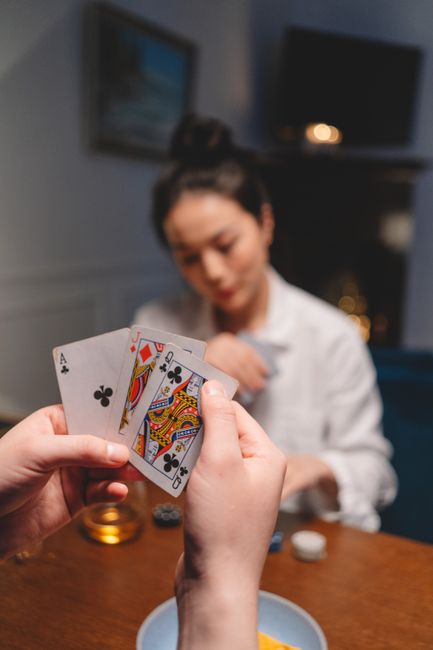
You've probably noticed that the online casino world is louder than ever. Every other ad promises you a millionaire's lifestyle, and every poker site claims to have the softest tables. But let's cut through the noise. If you're going to spend your time and money in iGaming, you deserve real information—not recycled marketing fluff. I've been around this industry for over a decade, and I've seen the highs, the lows, and the trends that stick. This article isn't about guarantees (they don't exist), but it is about giving you a practical edge. Whether you're spinning slots, grinding poker, or placing sports bets, here's what actually matters.
Slots: It's Not All Random—But It's Closer Than You Think
Slots are the backbone of any casino floor, digital or brick-and-mortar. And yes, the outcome of every spin is determined by a random number generator (RNG). That part is non-negotiable. But that doesn't mean all slots are created equal. The return to player (RTP) percentage and volatility are the two numbers you should care about most.
RTP is the theoretical average amount returned to players over millions of spins. A 96% RTP slot returns $96 for every $100 wagered—on average. Volatility, on the other hand, tells you how those returns are distributed. Low-volatility slots pay small amounts frequently; high-volatility slots pay huge amounts rarely. For example, Book of Dead (RTP ~96.2%) is high volatility. You might spin 300 times without a bonus, then hit a 5,000x multiplier. If you have a small bankroll, that's a recipe for burnout.
Here's a quick framework to pick slots that match your style: For more on this, see Rikvip.
- Small bankroll, long session: Choose low-volatility slots with RTP above 96.5%, like Starburst (96.1%) or Blood Suckers (98%).
- Medium bankroll, balanced risk: Go for medium volatility, 96% RTP slots like Gonzo's Quest.
- Big bankroll, jackpot dreams: High-volatility slots like Bonanza or San Quentin—but set a loss limit beforehand.
One more tip: always check the slot's max bet. Some progressive jackpots require a max bet to qualify for the top prize. If you're chasing a million-dollar payout, that's non-negotiable.
Poker: Stop Playing the Cards, Start Playing the Players
If you're still treating poker as a math puzzle where the best hand always wins, you're leaving money on the table. Poker is a game of incomplete information, and the biggest edge comes from reading opponents. That doesn't mean Hollywood-style tells. Online, it means bet sizing patterns, timing tells, and frequency analysis.
Let's say you're in a $1/$2 no-limit hold'em game. A player raises preflop to $6 from early position. You call with J♦ T♦. The flop comes 9♣ 8♥ 2♠. You have an open-ended straight draw. Your opponent bets $9 into a $13 pot—about 70% pot. That's a polarized bet. They either have a strong hand (set, two pair) or a bluff. Most recreational players under-bluff in this spot. So your best move is often to call and re-evaluate on the turn.
But here's the deeper point: track your opponents. Use a HUD (heads-up display) if the site allows it. Look for players with a VPIP (voluntarily put money in pot) above 40% and a preflop raise below 10%. Those are calling stations. Against them, never bluff—just value bet relentlessly. Conversely, a player with VPIP under 18% and high aggression is a nit. You can steal their blinds with impunity.
Bankroll management is the unsexy hero of poker. Even the best players go on 20 buy-in downswings. If you're playing $1/$2 with a $200 buy-in, you need at least $4,000 dedicated to poker. That's 20 buy-ins. Anything less and you're gambling, not playing professionally.
Sports Betting: The Margin Is Your Enemy (and Your Friend)
Sports betting gets a bad rap because most people treat it like a lottery ticket. But if you approach it like an investor, you can squeeze out a long-term profit. The key concept is expected value (EV). Every bet has an EV, and you should only place bets with positive EV.
How do you find positive EV? Start by understanding the bookmaker's margin. A typical NFL point spread has -110 odds on both sides. That means you risk $110 to win $100. The implied probability is 52.38% for each side, totaling 104.76%. That extra 4.76% is the bookie's margin. You need to win 52.38% of your bets just to break even. That's tough.
But here's where it gets interesting: line shopping. Different sportsbooks offer different lines. One book might have the Chiefs -3, another has them -2.5. That half-point is huge. Over a season, consistently getting the best line can turn a losing bettor into a winning one. Use odds comparison tools. They're free and take seconds.
Another angle: player props and niche markets. The margins are often lower because books aren't as efficient. For example, betting on a specific player's assists in an NBA game might have a 4% margin instead of 7%. That doesn't guarantee a win, but it improves your EV.
And please, never bet on your favorite team. Emotional betting is the fastest way to lose your bankroll. Treat every bet like a cold calculation.
Bankroll Management: The One Rule You Can't Ignore
I don't care if you're playing slots, poker, or betting on the Super Bowl. If you don't manage your bankroll, you will lose. It's not a matter of if, but when. Here's a simple rule that works across all iGaming verticals:
- Separate your gambling bankroll from your life savings. Never, ever use rent money or grocery money.
- Set a monthly deposit limit. Most regulated sites let you do this in your account settings. Use it.
- Use the 5% rule for slots and sports betting. Never bet more than 5% of your total bankroll on a single spin or bet. For poker, use 2% for cash games and 5% for tournaments.
- Track everything. A simple spreadsheet with date, game, bet size, and outcome will open your eyes. Most people have no idea how much they actually win or lose.
And if you ever feel like you're chasing losses, stop. That's the moment the casino has you. Take a 24-hour break. The games will still be there tomorrow.
The Future of iGaming: What's Actually Changing
Crypto casinos, AI-driven slot design, and live dealer games are all the rage. But the biggest shift is regulation. More countries are legalizing online gambling, which means better consumer protections—and unfortunately, more taxes. For players, that's a mixed bag. You get safer deposits and withdrawals, but the house edge might creep up to cover licensing fees.
Another trend: skill-based slots. Some developers are experimenting with slots that have a small skill element, like choosing which reel to nudge. Don't expect them to replace traditional slots, but they're worth a look if you want a bit more agency.
Finally, mobile is king. Over 70% of online casino revenue now comes from smartphones. If a site's mobile experience is clunky, skip it. There are too many good options out there.
Final Thoughts: Play Smart, Not Hard
iGaming is entertainment first. The moment you forget that, you're in trouble. But if you treat it like a hobby with a budget, you can enjoy slots, poker, and betting without the financial hangover. Use the RTP numbers, read the players, shop for the best lines, and never bet more than you can afford to lose. And remember: the house always has an edge. Your job is to minimize it. Now go have some fun—responsibly.
LEAVE A COMMENT